

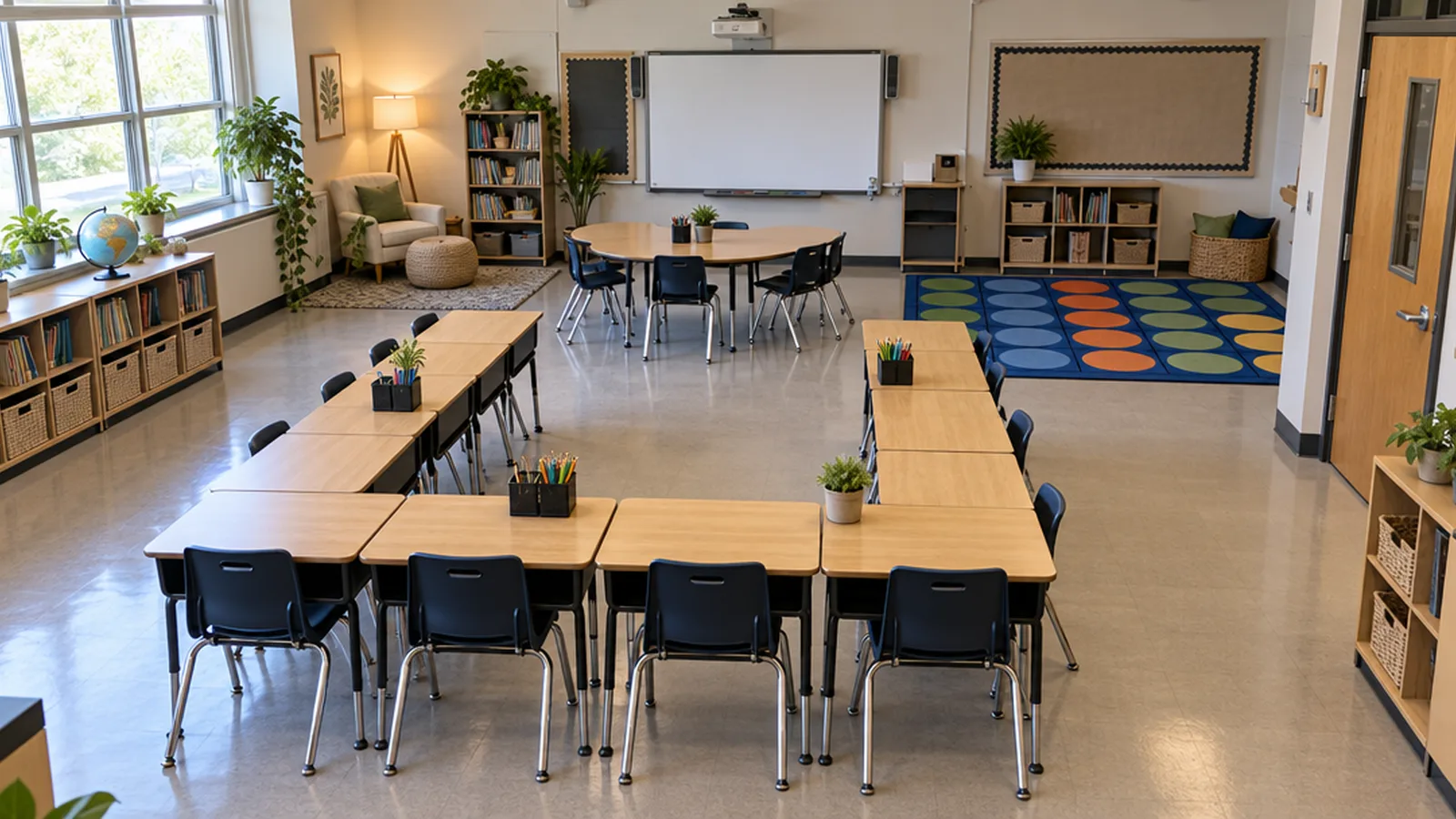
Layout is the part of classroom design that changes how a day actually goes. Where the desks, rug, centers and teacher space sit affects transitions, noise, sightlines and how easily students can focus. This section is about arranging the physical room for learning and classroom management.
What layout changes in a classroom
A good layout lets you see every student from where you teach most. It gives students clear paths to supplies, the door and the turn-in tray without crossing through a group at work. It separates loud and quiet activities so a busy center doesn’t drown out a reading group. And it leaves room to gather the whole class when you need to.
Plan before you move furniture
Sketch the room first, marking doors, windows, outlets, built-in shelves and anything you can’t move. Knowing the room’s dimensions makes it much easier to test arrangements on paper instead of pushing desks around in August.
The main topics in this section
Articles in this section are grouped under a handful of main sub-topics.
Classroom Setup
This sub-topic covers setting up a room from scratch, whether it’s your first classroom or a new grade level. It includes elementary, kindergarten, small-room, art room and special education classroom setups, plus furniture ideas and furniture grants.
Seating Arrangements
Rows, U-shapes, pods and flexible seating each support different kinds of teaching. This sub-topic covers classroom seating arrangements, the U-shaped layout, seating for 30 students, defronting the classroom, flexible seating research and how to manage flexible seating day to day.
Calm Corner Classroom
A calm corner gives students a place to reset without leaving the room. This sub-topic covers how to set one up, calm boxes and calm down corner printables.
Classroom Reading Corner
A reading corner invites students to settle in with a book. This sub-topic covers where to place it, what seating and lighting work well and how to keep it inviting without clutter.
Lighting
Light shapes how a room feels and how well students can see their work. This sub-topic covers how classroom lighting affects learning, fluorescent lights in classrooms and options like light covers.
Learning centers, plants and the rest of the room
This section also covers learning centers and classroom zones, writing stations, rugs, room dividers and plants for rooms with and without windows. It touches on approaches like Montessori-inspired and sensory-friendly rooms, as well as outdoor classroom ideas.
Keep exits, sightlines and safety in the plan
Every layout needs clear paths to the door and emergency exits, and furniture should never block them. Tall shelves and bookcases may need to be anchored to the wall, and room dividers shouldn’t create hidden spaces you can’t see into. Lighting additions like string lights or fixture covers are often restricted by schools and fire codes. Check with your school and facilities staff before rearranging large furniture or adding anything electrical.